Among the combinations observed in the supplement stacks of men who maintain consistent resistance training habits, creatine and magnesium appear together with a frequency that the editorial desk at Arekon Press has noted across multiple sources. The pairing is not a novelty; it reflects the distinct and complementary roles each plays in the physical output and recovery rhythm of active men.
The Desk Observation
The Arekon Press editorial desk catalogues supplement stacking patterns through a combination of published nutritional literature review and observation of documented daily routines shared in men's wellness communities across Southeast Asia. The patterns that emerge are not anecdotal in the colloquial sense; they represent a form of aggregate behavioural data — what active men have chosen to do with their daily supplement intake, consistently, over time.
Creatine and magnesium are among the most frequently discussed supplements in gym-focused nutritional awareness contexts. The reasons for each are distinct: creatine for its relationship with physical output over time in resistance training routines; magnesium for its observed contribution to muscle recovery rhythm after physical activity. Together, they address two adjacent aspects of the active men's supplement consideration — performance and recovery.
This editorial does not position either supplement as a replacement for a complete nutritional approach, nor as a ensure of specific results. It records what the published research notes and what observed stacking patterns reflect.
Creatine in Resistance Routines
Creatine is among the most extensively researched supplements in the nutritional literature relevant to resistance training. It is a naturally occurring compound found in small quantities in dietary protein sources, particularly red meat and fish. The body also produces it endogenously, though not at the quantities that sustained resistance training demands. Supplementation is the common approach for men who train regularly and observe a gap between dietary intake and training requirements.
Creatine supports physical output over time in resistance training routines. The mechanism observed in the nutritional literature is its role in the phosphocreatine energy pathway, which contributes to short-duration, high-intensity effort — the specific type of output central to resistance training sessions. The editorial summary here is that creatine's relevance to gym-based physical output is well-documented in published nutritional research, and its frequency in men's daily stacks reflects awareness of that record.
The form most observed in documented daily stacks is creatine monohydrate — the most widely studied form, with the most extensive published record. Men building a daily supplement stack tend to default to creatine monohydrate for this reason. Its simplicity as a supplement — a single ingredient, water-soluble, with a consistent daily intake pattern — makes it a practical addition to an established routine.

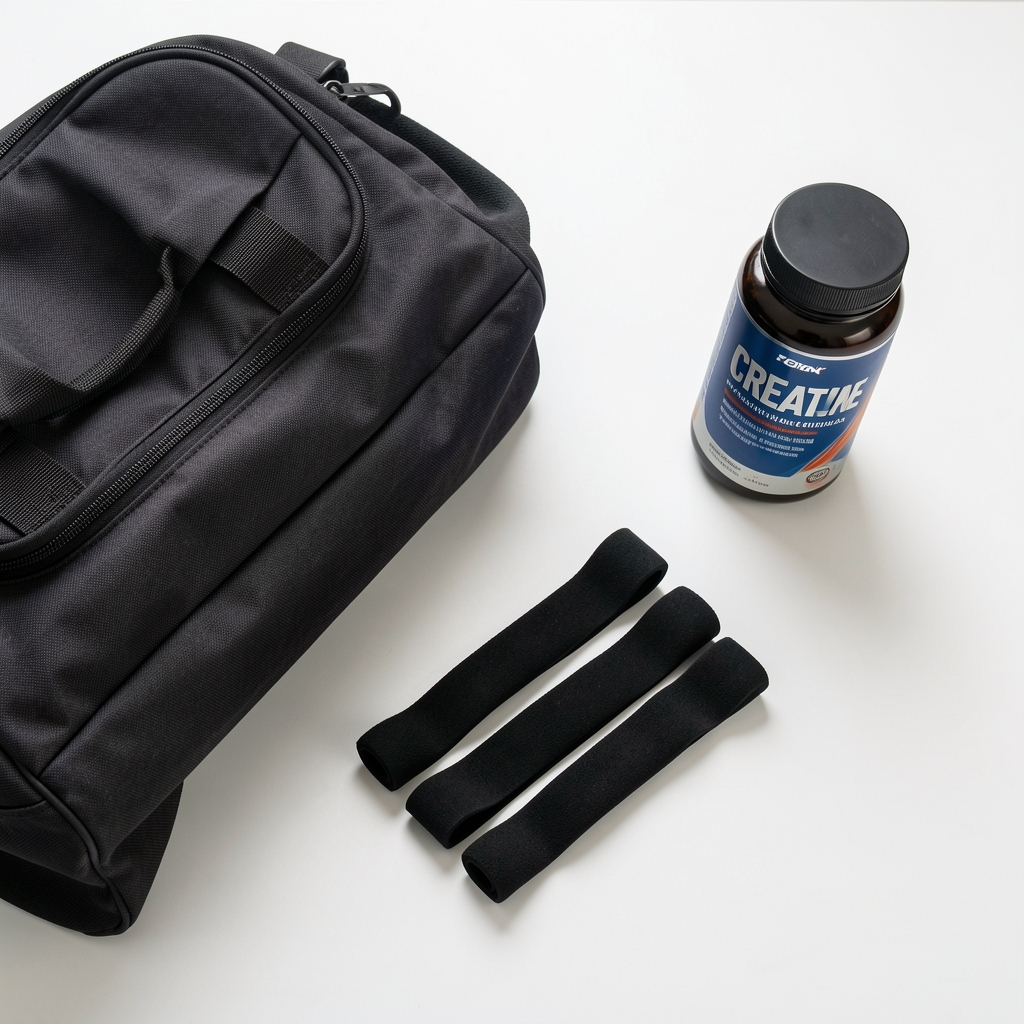
Supplement containers, editorial close-up — Arekon Press archive
"Creatine and magnesium address two adjacent aspects of the active men's supplement consideration — physical output and recovery rhythm — which explains their frequent co-occurrence in documented daily stacks."
Magnesium and Recovery Rhythm
Magnesium occupies a different position in the active man's nutritional stack. Where creatine addresses the output phase, magnesium is most frequently observed in the context of what follows — the recovery period after physical activity. Magnesium supports muscle recovery rhythm after physical activity, and its role in this context is well-represented in the nutritional research base.
Magnesium is an essential mineral involved in several hundred enzymatic processes in the body, many of which are relevant to physical activity — including protein synthesis, muscle contraction regulation, and energy production pathways. Active men tend to have higher baseline requirements than sedentary men, and dietary intake alone is frequently insufficient in the documented patterns of gym-based routines. This is part of why magnesium appears as a consistent addition to the stacks of men who train regularly.
Of the several forms of magnesium supplement available, the most commonly observed in active men's stacks are magnesium glycinate and magnesium citrate — forms with higher recorded bioavailability in the nutritional literature compared to magnesium oxide. Some men take magnesium in the evening, noting its observed relationship with rest quality and muscle relaxation. Others include it in a post-activity supplement window. The timing varies; the presence of magnesium in the stack is more consistent.
The Stacking Pattern
The observation that creatine and magnesium appear together in men's resistance training supplement stacks reflects a form of nutritional logic that is independent of any single authority's directive. Active men with some exposure to the published nutritional literature, or to wellness communities where that literature is discussed, tend to arrive at the same pairing through separate reasoning chains that converge on the same conclusion.
Creatine: to support sustained physical output across training sessions. Magnesium: to support the recovery period that follows. The two supplements address adjacent points in the training cycle — the effort and the reset — without duplicating each other's function. This complementary logic is part of what makes the pairing so durable in documented stacking habits.
A third element is frequently added to this pairing in more experienced stacks: protein. The daily protein intake target is a consistent consideration for men in resistance training routines, and whole food sources alone often fall short of the quantities required for the training volume maintained. The creatine-magnesium-protein triad represents what Arekon Press observes as the foundational performance layer in the most common documented stacks among active men.

Resistance training setting — editorial observation, Jakarta 2026
Timing Within the Daily Routine
The timing of creatine and magnesium within a daily routine is a subject of ongoing discussion in men's nutritional awareness communities. The editorial observation from Arekon Press is that the published research on timing is less decisive than it is on the basic case for including each supplement. Consistency of daily intake appears to be more relevant than the specific timing window in which each is taken.
The most common documented pattern is: creatine with the post-activity meal or with the morning routine on non-training days; magnesium in the evening or immediately post-activity. This pattern reflects two considerations — creatine's water solubility making it easy to incorporate into any meal window, and magnesium's observed relationship with post-activity muscle relaxation making the evening or post-workout window a natural fit.
The simplicity of this approach — two supplements, each with a clear and consistent daily intake window — is part of what makes the pairing a durable feature of the active men's daily routines documented in the Arekon Press archive. The editorial emphasis, consistent with the publication's broader tone, is on habits over interventions. Creatine and magnesium are long-term daily additions, not acute responses. Their value, as documented in the nutritional research base, is observed over weeks and months of consistent intake.
Key Observations
The following points summarise the editorial observations from this piece:
- Creatine and magnesium appear together frequently in the documented supplement stacks of men in resistance training routines, reflecting their complementary roles in physical output and recovery rhythm.
- Creatine supports physical output over time in resistance training; creatine monohydrate is the most commonly observed form in active men's stacks.
- Magnesium supports muscle recovery rhythm after physical activity; magnesium glycinate and citrate are the most frequently documented forms in terms of daily active men's routines.
- The pairing addresses two adjacent points in the training cycle — effort and recovery — without duplicating nutritional function.
- Timing consistency appears more relevant in the published record than specific intake windows; creatine is commonly taken with a meal, magnesium commonly in the evening or post-activity.
- Neither supplement functions as an immediate result. The published nutritional record documents their value as consistent daily habits over sustained periods.
Editorial Notice
Articles published on Arekon Press are editorial in nature and reflect the writers' observations on everyday supplementation habits and nutritional awareness for active men. The content is not intended as professional advice, nor as guidance for the management of any specific condition. Readers with specific concerns about their daily routines are encouraged to speak with a qualified wellness professional.